Showing posts with label Literature. Show all posts

Tuesday, April 17, 2012

Fellowship...

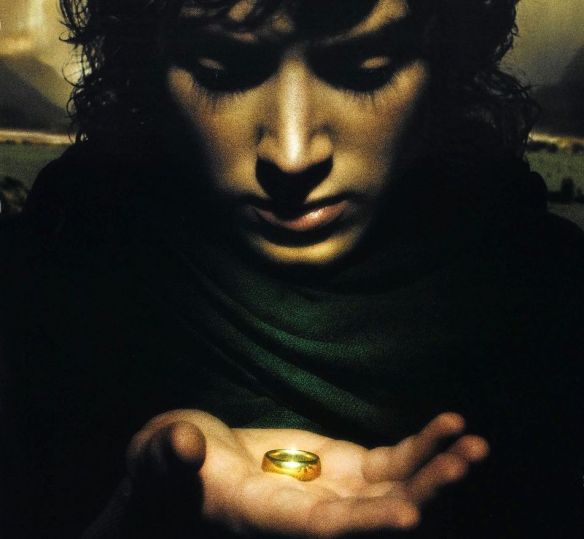
I randomly thought of The Fellowship of the Ring the other morning when I heard the word "fellowship". The ring, standing for evil, for temptation, brought together a company which together sought to destroy and defeat its dark power. Fellowship isn't a passive thing - it has to constantly be engaged in building unity and carrying one another's burdens.

Sometimes I find true fellowship difficult. I think it has a lot to do with today's society, and a lot to do with sin. Being social in our culture often means constantly checking our phone for texts or spending hours on facebook. For some, it means going to parties, or maybe in the church it means going to every Bible study and event you possibly can. Sometimes the most "social" people are the hardest to really know. I know for me, pride and false assumptions and expectations can become a barrier to true fellowship.

I think we all long for community, real community. And the tough thing about this is that seeking community and fellowship can sometimes become an idol that keeps us from seeking the truth and purity of God and His word. But I don't think it has to be that way. (There I go again, using "and" and "but" to begin sentences.)

What is it that makes the fellowship found in Tolkein so important and memorable? I should think it is the fact that they are brought together for a common cause - to fight and destroy the power of evil, even the evil that is within themselves.Yet what about the times when we feel alone, when we feel frustrated by a "lack" of fellowship?

Dietrich Bonhoeffer wrote, “Love community and you will kill it. Love your brother and you will build it." That is such a profound reality, because it is only in obedience to the command of Christ and love for our brothers and sisters that true spiritual community exists. Once again, I'm reminded of the definition of love - sacrificing, unconditional, and not self-seeking. “Those who love their dream of a Christian community more than the Christian community itself become destroyers of that Christian community even though their personal intentions may be ever so honest, earnest, and sacrificial.”(Bonhoeffer, Life Together) It is our common redemption in Christ that gives us fellowship. We are not to pursue an ideal or a vision, but rather offer ourselves to God in service and compassion, even to the least of these. 

We are each "ring bearers" of sorts, constantly battling our flesh. But even when we feel alone, we are not alone. We fight a battle, "not against flesh and blood, but against the rulers, against the authorities, against the powers of this dark world and against the spiritual forces of evil in the heavenly realms." (Eph 6:12)

You are no longer foreigners and strangers, 
but fellow citizens with God’s people and also members of his household, 
built on the foundation of the apostles and prophets, 
with Christ Jesus himself as the chief cornerstone. 
In him the whole building is joined together 
and rises to become a holy temple in the Lord. 
And in him you too are being built together to become a dwelling 
in which God lives by his Spirit. (Eph 2:19-22)

Now that, my friends, is an extraordinary promise! He has given us a fellowship with Him and with the redeemed that can never be taken away. Though our relationships with one another will never be perfect, and will never "fulfill our needs", He himself will supply our needs as we "follow God’s example, therefore, as dearly loved children and walk in the way of love, just as Christ loved us and gave himself up for us as a fragrant offering and sacrifice to God." (Eph 5:1-2) I want to truly learn this, as I pray for a greater fellowship with my brothers and sisters, and a more abandoned obedience to Christ.

Tuesday, April 3, 2012

Bookly Beauty


 To me, books are fine art -
and the older, the better.
If you see me walk into an antique store,
you'll soon find me in the book section,
gingerly opening the crumbling pages.


I have to say I'm not really sold on the whole Kindle/e-reader thing.
I suppose it's practical, but nothing could ever replace my book collection.
So why not have a little photo shoot with some of my antique books?
Yep, that's what I did. ;) 


 Each volume is unique.
Each possesses the power to carry a willing reader
to magical lands,
to discover unchangeable truth,
 to bring colour and light through those printed words in black and white.


Some from book sales, other from family, or given as gifts. 
The speller and reader above came from my grandparents.


The reader has some wonderful illustrations,
and the stories are quite delightful.

What are your favorite books, and why?

Tuesday, January 10, 2012

Once Upon a Time...

The softly falling rain silences the world beyond my window as I wrap myself in a soft blanket and open the book before me. The pattering on my windowpane slowly fades away until all I can hear is the beating of dragon wings and the ring of dueling swords. My tea grows cold while my imagination is flooded with the spicy aroma of pine forests, the taut emotions of tangled conflicts, the piercingly sad beauty of loyalty and loss.

~ * ~ * ~ * ~

A sense of story seems wired into the the essence of humanity. Legends, fairytales, and histories from ages past still manage to enchant us. Why story? Why this fascination with things that have no correlation in our immediate lives? What does it matter, really? That a story should have a conclusion, a "happily ever after", a rags-to-riches ending, certainly doesn't parallel what we see of reality.

And yet it resonates.

I don't know if you've ever found this, but there can be times when fiction seems to expose a truer truth, a higher reality than we see with our eyes. Through words penned by another soul, longings are awakened for a country beyond imagination, a place we inexplicably know is home.

Perhaps it is because we belong to such a story.

It is written - written for us, written of us. The cynics may scoff, but there is a spotless bride, a coming King, a sleeper who was awakened, a love that is real. God is the ultimate author of all that is good. When our souls are stirred with the beauty of a well-crafted tale, perhaps it is because it is a reflection, in some vague way, of the story He has written. Even when reality shatters romantic idealism, there is an unseen reality that shines to defy the impossible, to redeem the irredeemable.

Existence would be flat and lifeless unless it was embodied by story. We do not read only the last page, when Prince Charming appears to rescue the princess and they ride off into the sunset to live happily ever after. The biting of our nails when the challenges seem insurmountable, the mirth of watching the hapless hero bumbling about, the bright fairy-tale colours on every page - these exist for a purpose of no less beauty. While prone to sin and human error, and having been used for ignoble purposes, God has gifted us with imagination and emotion because they are good. Thoughts and feelings have a purpose, meaning, and beauty - they are not reduced in meaning simply because of the greater, overarching story.

Likewise, the love of God exists not only for a certain end, but during every moment - He loves us not for what we can perform, but at every moment, and in every season - and for each moment there is a purpose, not only as a means to the end, but because God has breathed intrinsic value into every instant of time. There is a Story of greater beauty than any that has ever been penned by men, which is lived by everyone who believes. Abraham and Sarah, living in tents in the wilderness, looked ahead to the days of the unseen, promised city. Moses, a prince of Egypt, turned his back on earthly treasure to seek the reward of heaven. Rahab, a prostitute, was declared righteous for her belief and given a place of honor as an ancestor of the Messiah. A great cloud of witnesses goes before us, testifying to His glory, which outshines the value of anything real or imagined.

So let us imagine, let us dream, but oh! May we know the firm reality, the infinite depths of what exists for us in Christ. May we live, truly live, knowing that the great King is coming soon! The greatest love has come, chains are being undone, and we have a battle to fight!

Tuesday, November 1, 2011

I'm making friends with dead people....

This has nothing to do with Halloween or necromancing, in case you're worried. ;)

It all started in the frozen food section at Costco this summer. Amongst the herds of people gathered around the sample stations, my eye randomly fell upon a girl who was holding a book in her arms. In a glance I took in the front cover. It was nothing extraordinary - just a black and white photo of a bespectacled man. Something about the title seemed familiar though. Bonhoeffer... hmm, where have I seen that name before?

Suffice it to say that my steps soon led me to the book section, where I picked up a biography on a man of whom I had barely heard. Not one to make hasty purchases on anything over $5, I nonetheless was enticed to purchase the book, lured on by my current obsession with WWII. Anyhow, $9.99 could be easily justified if it turned out to be half-decent.

It did.

I just started reading Eric Metaxas' biography of Bonhoeffer last week, and it has been incredibly fascinating.  I've really been getting into biographies/journals lately, which isn't really typical for me, but I've been so encouraged by them.  As Brett and Alex Harris say, I've been "making friends with dead people".  These accounts remind me of the "great cloud of witnesses" that Hebrews 12:1 speaks of, and the hall of faith in Hebrews 11, which lists many examples of faithful men and women who lived their lives in obedience to God.

This is the same type of life I discovered as I began to research the legacy of Dietrich Bonhoeffer, a man who searched for truth and was found by God, and ultimately paid the ultimate price for his obedience when he was hanged by the gestapo.  I won't go into the details of his life here, but you can watch a 1/2 hour summary by Eric Metaxas here. (It starts slowly - if you want to skip the intro, go to 8:00) One of the things I have been most struck by so far is just how similar the world of Bonhoeffer's time was to the world of today, especially in terms of culture, philosophy, religion, and the church. I want to share a few quotes that really hit me. I pray that this generation of believers would be inspired by these words from the past, and empowered by the Spirit to seek and live the truth of God's Word.

"The religion of Christ is not a tidbit after one's bread, on the contrary, it is the bread or it is nothing. People should at least understand and concede this if they call themselves Christian."

"Humanism and mysticism, the seemingly most beautiful blossoms put forth by the Christian religion, extolled today as the highest ideals of the human spirit; indeed often as the crown itself of the Christian idea - [but] it is precisely the Christian idea itself that must reject them as an apotheosis of the creature and as such a challenge to the honor belonging to God alone."

"In New York they preach about virtually everything; only one thing is not addressed, or is addressed so rarely that I have as yet been unable to hear it, namely, the gospel of Jesus Christ, the cross, sin and forgiveness, death and life."

"Do not try to make the Bible relevant. Its relevance is axiomatic... Do not defend God's Word, but testify to it... Trust to the Word."

Tuesday, October 19, 2010

The Magician's Nephew- Lessons in Human Nature

This, the account of the first human encounter with the world of Narnia, provides one of the most intimate views into the every-day struggles of human nature.  Although The Magician's Nephew has never been my favorite book in the series, I find that I can understand the subtle themes better than when I read it as a child.  Although this is the sixth book published in the Chronicles of Narnia, it functions much like the Genesis creation account, providing important background information that aids in the understanding of the events and conflicts of the other books.

Near the beginning of the narrative, in the dying world of Charn, Digory chooses to act cruelly and selfishly as he pushes Polly and her warning aside in his desire to strike the bell which awakens the evil Jadis, queen of Charn.  Although he initially seeks to justify himself as being enchanted by the inscription under the bell, when he comes face to face with Aslan in Narnia, he is instantly convicted of his wrongdoing, and sees that there is indeed no excuse.  The motif of the "forbidden fruit" is used repeatedly throughout the book.  Just as Adam and Eve in the Garden of Eden in Genesis, we often wonder why something is forbidden from us.  Why can we not eat from this beautiful tree, and only from the other trees?  Why must we not follow our impulses, when they seem so harmless at the time?  The very reason we ask such questions hints at the conscience God has placed within us.  Con/science, literally, means with knowledge.  God does not punish us for things we do unknowingly- no, we have no excuse because we know from the Law of his Word and the Law written on our hearts that our deeds are evil.  We make excuses only because we know at heart that we are guilty.  There is no excusing or denying our sin when we meet the Lord face to face, as we all must someday.
The creation scene is beautiful, as the sun rises and the voice of Aslan evokes several different, but strong and decisive responses from the group witnessing the scene.  Uncle Andrew is frightened and resents the voice, while the Witch becomes proud and hard in response to it.  The children feel a wonderful stirring in their hearts as they realize its beauty.  The cart-horse becomes joyful and spirited once again, and the cabby is lost in wonder at this voice which to him seems strangely familiar.  We must all react to the voice of God that stirs our soul.  Will you respond by worshiping God, or by hardening your heart and rejecting his call?

As one of the protagonists, Digory is a character with whom we empathize and relate.  After he meets with the Lion face to face, he sees the true nature of his sin and repents of his selfish attitude. In a poignant moment he fleetingly contemplates bargaining to do Aslan's bidding if the Lion would help his mother get well, but instantly realizes that Aslan isn't the sort of person to be "bargain[ed] with".  Instead, he agrees to embark on a quest to help remedy the evil that he brought into this new world.  Overcome with grief for his mother, Digory looks pleadingly into Aslan's face and marvels to see that Aslan's sorrow over his mother's sickness is even greater than his own.  What a comfort to us that "Jesus wept" for the death of a friend, and the sorrow of the mourners (John 11:35).  Many of us know this verse as the shortest verse in the Bible, but it is laced with such tenderness and should be held dearly to us in times of grief.  We do not grieve alone- Christ shares our sorrow.  He has borne the sorrow of the ages, and bears the sorrow of the future as well.  And yet, he cares for us individually, counting the very hairs of our heads.  He desires to heal our hearts and bind our wounds.

I realize that I have touched on many themes in this short synopsis, and I apologize if it is confusing... it will probably make more sense if you have read The Magician's Nephew.  I have one more point to make, and personally I think it is the most important to understand.  In light of the perfect, righteous, loving, and compassionate nature of Christ, who are we?  May I propose that we are all "Uncle Andrews" at heart?  Just to paint a brief picture of what that looks like, let's take a peek at Uncle Andrew's nature.  He believes he has a link into the world of magic- a "high and lonely destiny", if you will- through his possession of the magical rings.  He doesn't even understand them, but yet he uses them to cruelly destroy guinea pigs, and tricks his nephew and Polly into using the rings.  He justifies his actions to Digory by telling him that grown-ups, and especially magicians, don't have to live by the same code of ethics or morality.  When Uncle Andrew is unwittingly dragged to Narnia, he works hard to convince himself that the Narnian animals were roaring rather than speaking, and that Aslan was a "dumb animal" and did not in fact create the world of Narnia, that he eventually believes his own illusion.  Although this poor old man is obviously in a prison of his own making, we can't help but feel a bit sorry for him as he is enslaved by the powerful and evil witch, Jadis, who ironically also says she has a "high and lonely destiny".  How are we like this sniveling, despicable, pitiable man?  In almost every way.  We have seen the glory and perfect design of God's created world, but many close their minds to it.  God is not silent, but if people work hard enough to pretend to hear something else, they can eventually deceive even themselves.  We are utterly depraved and despicable, enslaved by our sin to the power of evil.  We serve the devil, an entity much more cunning and subversive than Jadis, but equally as alluring.  Indeed, Satan masquerades himself as an angel of light. (2 Cor 11:14)  We can be freed only by the power of God, who has power over our sin, over death, and over Satan.  Do not harden your heart or close your ears!

Thursday, October 14, 2010

An Introduction to the Chronicles of Narnia

Despite the obvious connections with the biblical creation and redemption accounts, CS Lewis did not seek to create a solid allegory.  His purpose, as with his other works of fiction, is to imagine how God would create and redeem a world much different than our own.  In the Chronicles of Narnia, this is done subtly, never disturbing the fantasy world that children are so drawn to.  As I first picked up these books and devoured them at age 8 or 9, I would sometimes almost believe that such a world existed.  Of course, I knew in my head it didn't, but it was a delightful fantasy.  Even as a young child, I could see that the world was a place touched by evil and sorrow.  Surely, within all of us there is- or at least there has been at some point- the desire to believe that there is somewhere better.  As a Christian, I rest my life in the hope that neither this world, nor the imaginary world of Narnia is my home- my home is the place in heaven which Christ is preparing for me.  In my pre-teen and early teen years, I continued to read and re-read these books.  I still find them to be a refreshing and though-provoking read.  As CS Lewis said, "A children's story that can only be enjoyed by children is not a good children's story in the slightest."

image credit
As I grew older, the stories of talking animals, battles, and the glorious power of Aslan still entertained me, but I found myself drawn more and more to the meaning behind the words.  I noticed the brief notes and comments that Lewis placed unobtrusively throughout the text, and realized that they had a deeper meaning that often corresponded with the lessons I was learning in my study of the Bible.  Occasionally, I noticed that some ideas seemed to oppose biblical principles.  So, although I could not agree with 100% of what Lewis said, I was learning important lessons.  I knew that I should learn from and enjoy what I read, but that I must examine it by what I knew God said was true.  I admire CS Lewis for his skill at writing, apologetics, and rhetoric, but I have realized that no one person is entirely worthy of trust or emulation besides Christ.  That disclaimer and warning aside, I will, in my next post, embark on my purpose of unearthing an important lesson on battling evil and temptation that can be found in The Magician's Nephew.